Key takeaways
- A building report finds major visible defects; a pest report checks for active termites and other timber pests. Get both.
- Book the inspection before you exchange, or straight after exchange so it’s done inside the 5 business day cooling-off period.
- There is no cooling-off at auction, so inspect before auction day.
- Pulling out during cooling-off costs 0.25% of the price, which is small next to major structural or termite repairs.
- Use a licensed builder, surveyor or architect with professional indemnity insurance, and read what they couldn’t inspect.
A building and pest inspection is a professional check of a property’s condition before you commit to buying it. In NSW it’s one of the cheapest ways to avoid an expensive mistake. The written report tells you about structural problems, damp, safety hazards and termite activity while you can still negotiate or walk away.
What a building inspection checks
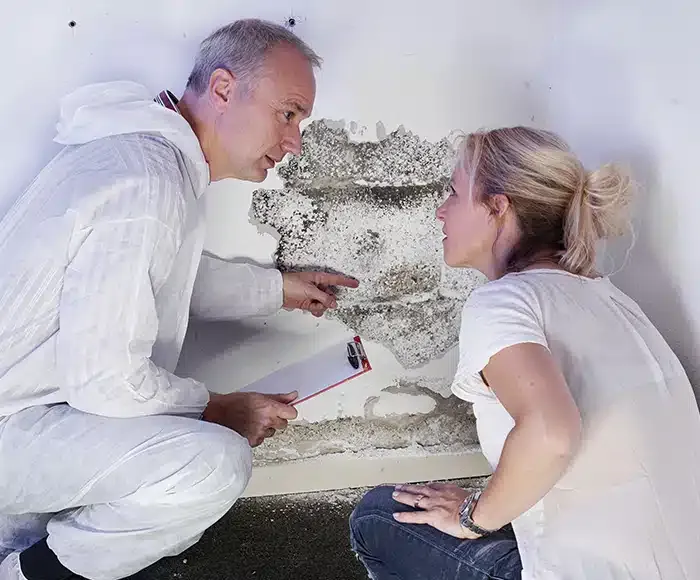
A pre-purchase building inspection, sometimes called a standard property report, is a written account of the property’s condition. There is an Australian Standard for these reports (usually AS 4349), but it doesn’t set their style or content, so reports vary between inspectors. The inspector should check every accessible part of the property:
- The interior and exterior of the building
- The roof space, the roof exterior and the under-floor space
- The garage, carport and garden shed, and any separate laundry or toilet
- Small non-structural retaining walls, steps, fencing, paths and driveways
- Surface water drainage and stormwater run-off
You can also ask them to look at specific things, such as visible signs of asbestos, a working electrical safety switch and working smoke alarms. The report should summarise the overall condition for a property of that age and type, list any significant problems, and say which areas couldn’t be inspected and why.
Why you need the pest inspection too
A building report should point out visible damage caused by termites. It won’t tell you whether termites or other timber pests are still there. That is the pest inspector’s job, and NSW Fair Trading recommends getting one as well, especially where termites are a known problem.
Many inspection companies offer a combined building and pest report. One booking and one visit makes the timing easier when you only have a few days.
What the report won’t tell you
A standard report covers major problems visible on the day. It generally won’t include:
- an estimate of repair costs, or a list of minor defects
- termite detection (that’s the pest report)
- footings, concealed damp-proofing, electrical wiring, plumbing, drainage and gas fitting
- pools and pool equipment, air conditioning, appliances, fireplaces and chimneys
- any part the inspector couldn’t reach or see.
If you want repair costs and minor defects included, ask for a special-purpose property report. For an older home, consider a separate inspection by a licensed electrician. Loose-fill asbestos insulation can’t be identified by sight: only testing by a licensed asbestos assessor confirms it. If there’s a pool, check its compliance certificate, because a non-compliant pool usually becomes the buyer’s problem to fix after settlement.
Get your finance ready first
Phillip can help you get pre-approval in place before you pay for inspections, so a clean report means you’re ready to move.
When to book: before exchange, during cooling-off or before auction
Timing depends on how you’re buying. Inspectors usually need 2 to 3 days’ notice, so ask the agent for access as early as you can.
| How you’re buying | When to inspect | Your way out if the report is bad |
|---|---|---|
| Private sale, before exchange | As soon as you’re serious, with the vendor’s permission | Don’t exchange, or renegotiate the price |
| Private sale, during cooling-off | In the 5 business days after exchange (ends 5pm on day 5) | Withdraw in writing and forfeit 0.25% of the price |
| Private sale with a 66W certificate | Before exchange | None: you’ve waived the cooling-off period |
| Auction | Before auction day | None: there is no cooling-off at auction |
Example: the cost of pulling out
On a hypothetical $900,000 purchase, withdrawing during cooling-off costs 0.25% of the price, or $2,250. The amount comes out of the deposit you paid on exchange.
Your conveyancer can also try to negotiate a building and pest condition into a private sale contract. Our guide to contract of sale clauses in NSW explains how.
What does a building and pest inspection cost?
There’s no set price. NSW Fair Trading notes that a report’s format, detail and cost depend on the type of property and the inspector’s process. Size, age, location and whether you add a pest or strata report all matter. Get two or three quotes and compare what each report covers, not only the price.
You may be able to save. When you ask for a copy of the contract, the agent must tell you about earlier inspection reports they know of, and you might be able to buy a copy for less. A vendor’s pre-sale report can help too, but it isn’t a substitute for your own independent report.
How to choose an inspector
- A suitably qualified person: a licensed builder, a surveyor or an architect
- Professional indemnity insurance, confirmed in writing
- A sample report, so you can see how clearly they describe defects
- A written scope: what’s included, what isn’t and when you’ll receive the report
- Your particular concerns noted in the booking, such as cracks, damp or an unapproved extension
You can check a builder’s licence with the Verify NSW licence check. If you’re unhappy with a report, raise it with the inspector first. If a missed defect costs you a lot later, get legal advice.
What to do with the report
Read the summary and the exclusions
Start with the major defects and the list of areas not inspected. Ask the inspector to explain anything unclear.
Get specialist advice on big issues
A structural engineer, electrician, plumber or pest controller can tell you how serious a problem is.
Negotiate
Use the findings to ask for a lower price, or ask your conveyancer to make repairs a condition of the sale.
Budget, or walk away
If you go ahead, set money aside for repairs. If you don’t, withdraw in writing before cooling-off ends.
Planning repairs or a renovation after you buy? Tell us early and we can factor it into your loan from the start. See how we help with financing a renovation, and read our guide to home loan pre-approval and how to make an offer on a house in NSW. Buying your first home? Start with our first home buyer page.
Frequently asked questions
Not usually. A building report should note visible termite damage, but it won’t confirm whether termites or other timber pests are still active. For that you need a separate pest inspection, or a combined building and pest report. NSW Fair Trading recommends a pest inspection as well, especially where termites are a known problem in the area.
A vendor’s pre-sale report can be a useful starting point, but NSW Fair Trading says it is not a substitute for your own independent report. It was commissioned for the seller. If you use one, check how recent it is, what it covered, who wrote it and whether they hold professional indemnity insurance.
NSW Fair Trading says most inspectors need at least 2 to 3 days’ notice. If you’re relying on the cooling-off period, book as soon as you exchange so the inspector can inspect, write the report and still leave you time to decide. Cooling-off ends at 5pm on the fifth business day after exchange.
No. The valuation is done for the lender to estimate what the property is worth as security for your loan. It isn’t designed to find defects, and you don’t get the protection of an inspection report. You still need your own building and pest inspection before you commit to the purchase.
It’s still worth it, but know its limits. In a strata or company title building, the inspector normally checks only the inside of the unit and its immediate exterior. For common property you need a special-purpose report, and a strata report on the owners corporation’s records helps you spot defects, disputes and major works.
Sources
- NSW Government: Pre-purchase inspection reports when buying a home (opens in a new tab)
- NSW Government: Inspecting a property before buying (opens in a new tab)
- NSW Fair Trading: Pre-purchase inspection reports (agent obligations) (opens in a new tab)
- NSW Government: Contracts and deposits when buying property in NSW (opens in a new tab)
- NSW Government: Buying property at an auction (opens in a new tab)
- Moneysmart: Buying a house (opens in a new tab)
This article is general information only and doesn't take your objectives, financial situation or needs into account. Figures and eligibility rules change; check the official sources above or talk to us before you act. Keystone Home Loans Pty Ltd ATF BEMA Family Trust, Credit Representative Number 564704 is authorised under Australian Credit Licence Number 384704.

Written by
Phillip Bui
Founder and Principal Mortgage Broker at Keystone Home Loans, based in Arncliffe, NSW. Accredited Mortgage Broker and Full Member of the Mortgage & Finance Association of Australia (MFAA).